
Stakeholder collaboration pivotal in conservation
MMOKOLODI, SEPT 05 (BOPA): – President Advocate Duma Boko has called for stronger partnerships between government, communities, the private sector and other stakeholders to safeguard Botswana’s natural heritage and ensure that conservation contributes to the country’s future development.
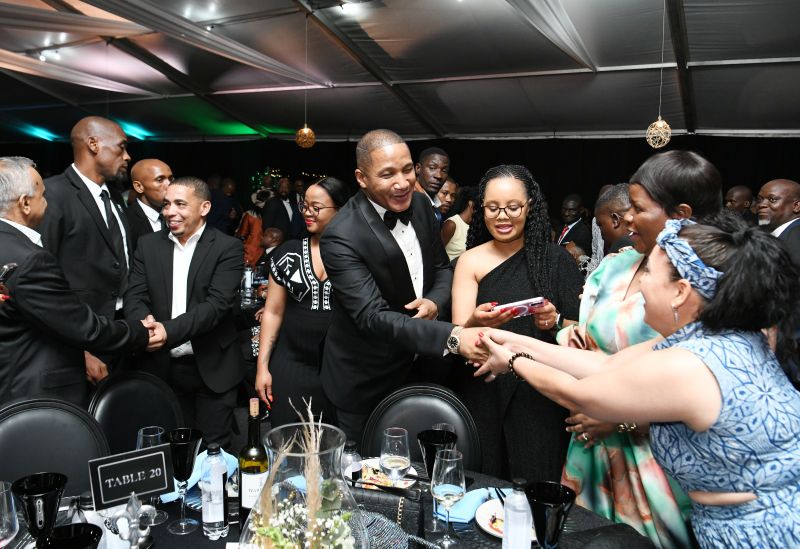
Speaking at the Mmokolodi Wildlife Foundation fundraising gala dinner at Mmokolodi Game Reserve on Friday, President Boko, who is also the Foundation’s patron, said conservation should be viewed as a shared national responsibility, particularly as the country faced growing environmental and economic pressures.
President Boko said Botswana’s natural environment formed part of the country’s national wealth and supports tourism, livelihoods, education and research.
“The challenge, therefore is to ensure that development and conservation advance together. Sustainable development is ultimately about that balance,” he said.
President Boko warned that the country could face severe pressure on water and food security, while its economy could also come under further strain.
“We need to stay vigilant, focused, work together and address the challenges that we face,” he said, adding that the experience of Mmokolodi Nature Reserve demonstrated the importance of conserving nature for present and future generations.
President Boko further commended the Kirby family for making land available for Mmokolodi wildlife reserve on a 99-year lease, saying their generosity helped give practical expression to the vision of establishing the reserve.
He said the reserve had grown into an iconic conservation institution through the contribution of successive leaders, board members, volunteers, staff, partners and supporters.
“Mmokolodi wildlife reserve is therefore more than just a sanctuary for wildlife. It is a place where conservation, education and public engagement come together,” he said.
President Boko said the reserve’s environmental education programmes were particularly important because they allowed young people to experience wildlife and nature directly.
He said such experiences helped cultivate appreciation, curiosity and responsibility among children, who would eventually become scientists, educators, conservationists, entrepreneurs, policymakers and leaders.
He urged stakeholders to support Mmokolodi’s efforts to extend its reach to children who might otherwise have limited opportunities to experience the natural environment.
“Government, communities, the private sector, civil society, development partners, educational institutions and individuals all have a role to play,” he said.
Meanwhile, Mmokolodi Wildlife Foundation board chairperson Mr Ramachandran Ottapathu said the reserve currently educates between 9 000 and 12 000 children annually, with an ambition to increase the number to 25 000.
Mmokolodi Wildlife Foundation was established in 1991 and opened as a reserve in 1994 in response to the concern that Botswana’s children should not grow up disconnected from wildlife and the natural environment.
He said the children were taught about environmental sustainability, wildlife conservation and the importance of protecting natural resources.
On conservation, Mr Ramachandran said Mmokolodi had been involved in rhino conservation for more than 30 years, with its white rhino breeding programme contributing to the reintroduction of 25 rhinos to different areas of Botswana.
He said the reserve was also proud of its newly completed free-flight aviary, which strengthened its wildlife conservation and rehabilitation efforts.
The foundation’s next ambition, he said, was to establish an intensive care unit as part of a comprehensive wildlife rehabilitation centre.
Mr Ramachandra also highlighted Mmokolodi’s tourism potential, citing its proximity to Gaborone as a key advantage in positioning the reserve as a tourism hub.
He said the reserve attracted about 12 000 visitors a month and aimed to increase this to 25 000.
Among the attractions are game viewing, rhino tracking, a restaurant and conference facilities.
“We invite you to not only support Mmokolodi as it is today, but to partner with us in building the Mmokolodi of tomorrow,” he said.
Mr Ramachandran said contributions to the foundation went toward supporting children’s environmental education, wildlife rehabilitation and broader conservation efforts. BOPA
By Lindi Morwaeng